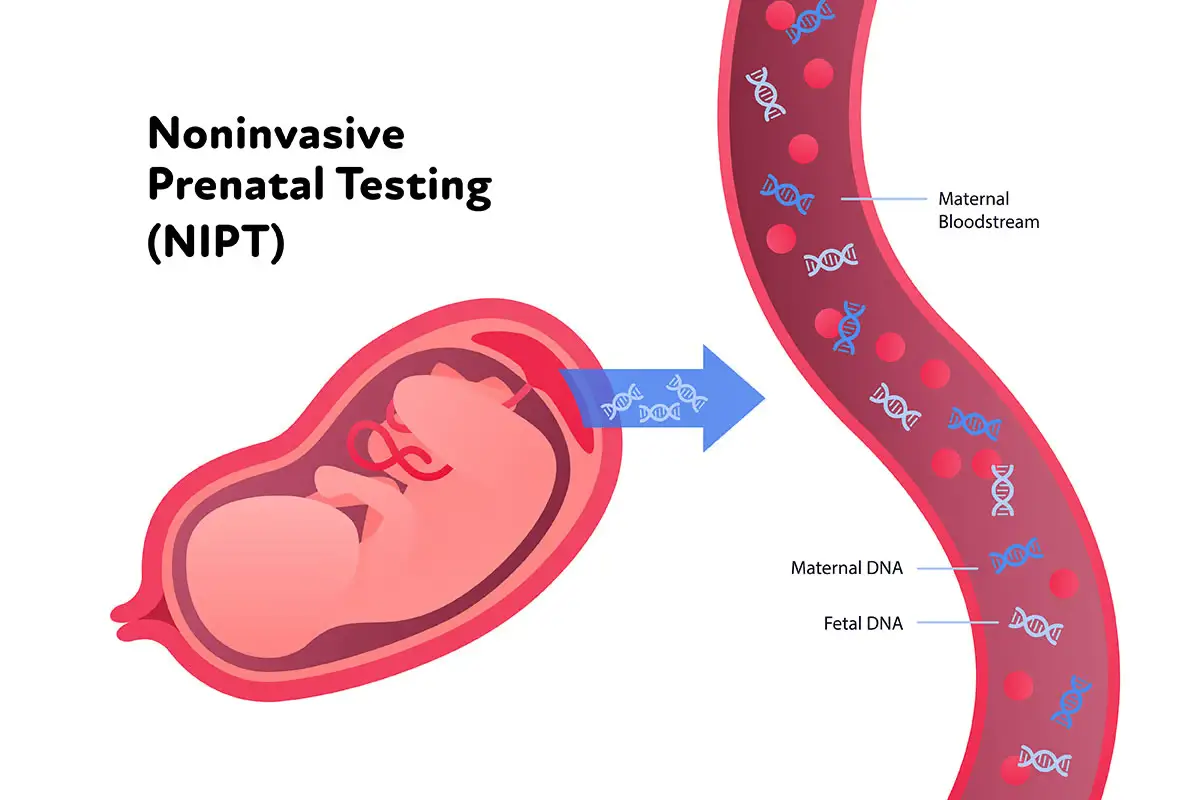
As a fetal medicine specialist, I often meet expectant parents who want early reassurance about their baby’s health while also wishing to avoid any risk to the pregnancy. At MOM Fetal Scans, I offer NIPT (Non-Invasive Prenatal Testing) in OMR as a scientifically advanced and completely safe screening option that supports informed and confident pregnancy care.

NIPT is not just a blood test—it is a thoughtful step in understanding your pregnancy better. When recommended appropriately and interpreted carefully, it helps identify pregnancies that may need closer monitoring or further diagnostic testing. My role is to ensure that every parent understands why the test is advised, what it can tell us, and how the results should be used responsibly, without unnecessary fear or confusion.

What NIPT Means in Modern Prenatal Care

Non-Invasive Prenatal Testing works by analysing small fragments of fetal DNA that circulate naturally in the mother’s bloodstream during pregnancy. This DNA originates from the placenta and reflects the baby’s chromosomal makeup. By studying these fragments, we can assess the risk for common chromosomal conditions with a very high level of accuracy.

In my practice, I emphasise that NIPT is a screening test, not a diagnosis. It helps us stratify risk early in pregnancy, allowing us to either provide reassurance or guide families toward further evaluation when required. When used responsibly, NIPT significantly reduces unnecessary invasive procedures and the anxiety associated with them.

Why I Recommend NIPT Carefully

  • Uses placental fetal DNA
  • No physical risk to the baby
  • High screening accuracy
  • Helpful in early pregnancy
  • Reduces avoidable invasive testing

When I Advise NIPT During Pregnancy

NIPT can be performed safely from 10 weeks of gestation onwards, once there is sufficient fetal DNA in the maternal blood. Performing the test at the correct time is essential to ensure reliable results and reduce test failure rates.

At MOM Fetal Scans, I rarely recommend NIPT in isolation. It is best integrated with a first-trimester ultrasound and NT scan, allowing us to assess both genetic risk and early fetal development together. This combined approach gives a clearer clinical picture and avoids misinterpretation of results.

Ideal Timing Considerations

  • From 10 weeks onwards
  • Best combined with NT scan
  • Suitable in early pregnancy
  • Planned after ultrasound review
  • Timed for optimal accuracy

Who Should Consider NIPT Screening

While NIPT can be offered to all pregnant women, it is especially valuable in pregnancies where the genetic risk may be higher. This includes advanced maternal age pregnancies, those with abnormal screening markers, or a previous history of chromosomal conditions.

As a doctor, I believe testing should never be routine or pressured. At MOM Fetal Scans, I take time to explain whether NIPT is appropriate for your individual pregnancy, ensuring that the decision is informed, voluntary, and aligned with your values.

Pregnancies Where NIPT Is Helpful

  • Maternal age above 35 years
  • Abnormal first-trimester screening
  • Previous affected pregnancy
  • IVF or high-risk pregnancies
  • Family history of genetic conditions

What Conditions NIPT Can Screen For

NIPT primarily screens for the most common chromosomal abnormalities that can significantly affect fetal development and long-term outcomes. These include Down syndrome (Trisomy 21), Trisomy 18, and Trisomy 13. Some testing panels may also assess select sex chromosome conditions.

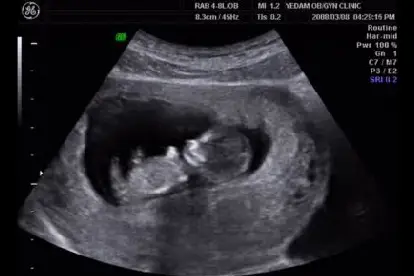
I always explain to parents that NIPT does not replace detailed ultrasound scans. Structural anomalies, organ development issues, and many genetic syndromes can only be detected through high-resolution ultrasound and targeted diagnostic testing.

Conditions Screened

  • Trisomy 21 (Down syndrome)
  • Trisomy 18
  • Trisomy 13
  • Selected sex chromosome variations
  • Overall chromosomal risk assessment

How the NIPT Test Is Performed

The NIPT procedure itself is simple and stress-free. A small blood sample is drawn from the mother, similar to routine blood tests. There is no needle near the baby, no hospital admission, and no recovery period.

What truly matters, however, is not just how the blood is drawn—but how the test is explained and followed up. At MOM Fetal Scans, I ensure that every patient receives thorough pre-test counselling so that expectations are realistic and results are interpreted correctly.

Procedure Overview

  • Simple maternal blood sample
  • No fasting required
  • Completely non-invasive
  • Safe for mother and baby
  • Performed under specialist care

Understanding Accuracy and Limitations

NIPT has a very high detection rate for common trisomies, making it one of the most reliable screening tools available today. However, it remains a risk assessment tool, not a confirmatory diagnosis.

In my consultations, I focus heavily on result interpretation. A “high-risk” report does not mean the baby is affected—it means further diagnostic testing may be needed. Similarly, a “low-risk” result is reassuring but does not rule out all genetic or structural conditions.

Key Points Parents Must Know

  • Very high screening accuracy
  • Not a diagnostic test
  • Rare false positives possible
  • Ultrasound correlation is essential
  • Further tests advised only if needed

NIPT vs Invasive Prenatal Testing

Invasive tests such as chorionic villus sampling (CVS) and amniocentesis provide definitive diagnosis but carry a small procedure-related risk. NIPT helps us identify which pregnancies truly require these diagnostic procedures.

As a fetal medicine specialist, my responsibility is to minimise risk while maximising information. NIPT allows us to do exactly that—by guiding invasive testing only when it is medically justified.

Comparative Perspective

  • NIPT is non-invasive
  • CVS & amniocentesis confirm diagnosis
  • NIPT reduces unnecessary procedures
  • Invasive tests used selectively
  • Decision guided by overall risk

Why I Offer NIPT at MOM Fetal Scans, OMR

MOM Fetal Scans is built on the principle that prenatal testing should be specialist-led, ethical, and patient-centric. Every NIPT recommendation, report review, and follow-up discussion is handled directly by me, ensuring consistency and clarity.

Parents trust us because we prioritise medical integrity, compassionate counselling, and personalised care, not just technology.

What Sets Us Apart

  • Consultant-led fetal medicine care
  • Ethical screening practices
  • Clear communication of results
  • Integrated ultrasound assessment
  • Trusted expertise in OMR

Preparing for Your NIPT Appointment

NIPT requires no special physical preparation. You may eat, drink, and continue your daily activities as usual. What matters most is being prepared with your medical records and questions.

I encourage parents to approach the test calmly and openly. My team and I are always available to address concerns and ensure that you feel supported at every step.

Simple Preparation Tips

  • No fasting needed
  • Carry previous scan reports
  • Share medical history
  • Stay relaxed and hydrated
  • Clarify doubts before testing

Conclusion – Trusted NIPT Testing Center in OMR

At MOM Fetal Scans, NIPT is offered with clinical responsibility, ethical clarity, and compassionate guidance. My goal is not just to provide results, but to help parents understand their pregnancy better and make informed decisions with confidence.

Call to Action:

📞 Consult Dr. Subhashini Ravi at MOM Fetal Scans, OMR, for expert-led NIPT screening and personalised prenatal guidance.

Frequently Asked Questions – NIPT Testing

The cost of NIPT can vary based on the testing panel used and the laboratory processing the sample. At MOM Fetal Scans, the focus is always on appropriate testing and accurate interpretation, and cost details are discussed transparently during consultation after assessing clinical need.

NIPT can identify fetal sex chromosomes, but it is primarily designed as a genetic screening test, not a gender confirmation test. In India, disclosure of fetal sex is strictly regulated by law, and results are handled in full compliance with legal and ethical guidelines.

No screening test is 100% accurate. While NIPT has very high sensitivity and specificity for common chromosomal conditions, it remains a screening test, not a diagnostic test. Any high-risk result must be confirmed through invasive diagnostic testing.

Rarely, discrepancies may occur due to biological factors such as placental mosaicism or low fetal DNA fraction. This is why NIPT results should always be interpreted by a fetal medicine specialist and correlated with ultrasound findings.

Yes. A low-risk NIPT result does not replace routine pregnancy ultrasounds. Anomaly scans, growth scans, and Doppler studies remain essential to assess fetal structure, development, and wellbeing throughout pregnancy.